Jagannatha Dasaru
|| ಜಲಜೇಷ್ಠ ನಿಭಾಕಾರಂ ಜಗದೀಶ ಪದಾಶ್ರಯಂ
ಜಗತೀತಲವಿಖ್ಯಾತಂ ಜಗನ್ನಾಥ ಗುರುಂಭಜೇ|
Life History – ದೇವರನಾಮಗಳು Devaranamagalu – click
ಬಯಸದಿರು ಐಹಿಕ ಸುಖ bayasadiru aihika sukha – click
ನವಗ್ರಹಸ್ತುತಿ – Navagraha Stuti – click
“ಫಲವಿದು ಬಾಳ್ದುದಕೆ” Phalavidu Baaldudake – ckick
Navavrundavana devaranama
ಶ್ರೀ ಜಗನ್ನಾಥದಾಸರ ನವವೃಂದಾವನ ಕೃತಿ
ವೃಂದಾವನಗಳಿಗಾನಮಿಸಿ ನಿತ್ಯ
ನಂದ ತೀರ್ಥ ಮತೋದ್ದಾರಕರೆನಿಪ | ಪ |
ವರ ಮಧ್ವಮುನಿ ಕಮಲಕರ ಪದ್ಮ ಸಂಜಾತ
ಗುರು ಪದ್ಮನಾಭ ಶ್ರೀ ರಾಮತೀರ್ಥ ಕವೀಂದ್ರಾ
ಕರಸರೋರುಹ ಜಾತ ವಾಗೀಶಮುನಿ
ಪರಘುವರ್ಯ ಗೋವಿಂದಾಖ್ಯ ಒಡೆಯರ ಪವಿತ್ರತಮ |1|
ಶ್ರೀ ಸುಧೀಂದ್ರಾರ್ಯರ ಪ್ರಪೌತ್ರರೆನಿಪ
ವಸುಧೀಂದ್ರ ವ್ಯಾಸರಾಯ ಶ್ರೀನಿವಾಸ ಮುನಿಯಾ
ಭೂಸುರರು ಪರಮ ಸಂತೋಷದಲಿ ಸ್ಮರಿಸೆ ನಿ
ರ್ದೋಷರನ ಮಾಡಿ ಅಭಿಲಾಷೆ ಪೂರೈಸುತಿಹ | 2 |
ದೇವತೆಗಳು ಇವರು ಸಂದೇಹ ಬಡಸಲ್ಲಾ ಮಿ-
ಥ್ಯಾವಾದಿಗಳ ಪರಾಭವ ಮಾಡಿ
ಈ ವಸುಂಧರೆಯೊಳಗೆ ಕೀರ್ತಿಯುತರಾಗಿ ಲ-
ಕ್ಷ್ಮೀವರ ಜಗನ್ನಾಥ ವಿಠಲನ ಐದಿಹರಾ | 3 |
siri ramana tava charana – click
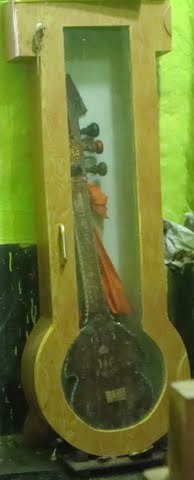
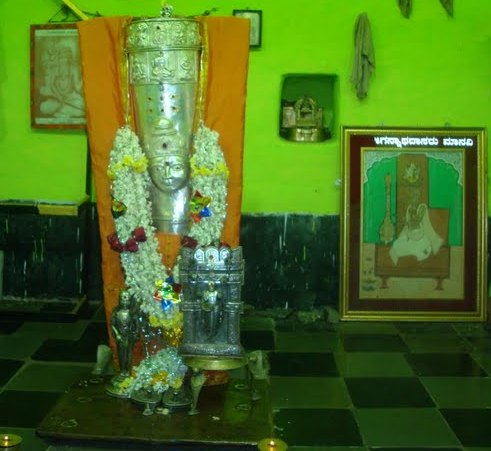
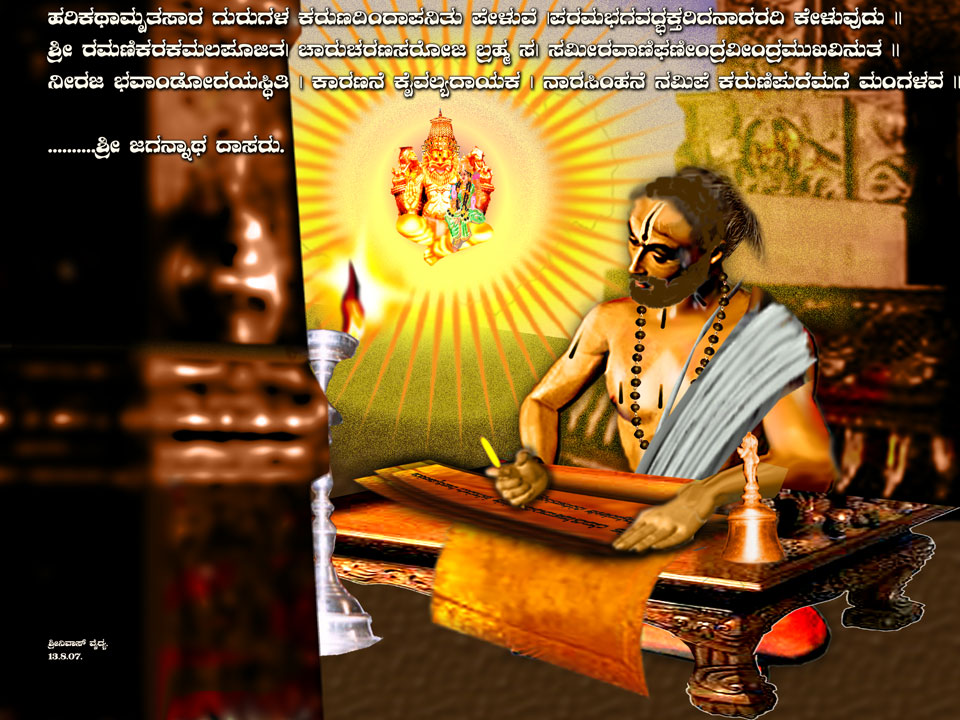
(art by Vaidya Srinivas)
Paata Pravachana – He started teaching his shisyas at his own house at Byagavata initially. He was looking after the boarding and lodging facility of all his shisyas. ( Usually Brahmin is said to be “bada Brahmin”. But it is not so in the case of Sri Jagannathadasaru. He was a bron rich Brahmin. ) Subsequently with the increase in the number of disciples, he shifted his teaching place to Manvi (Taluk Head Quarters).He was very well versed in Srimadacharyara Sarvamoola Granthas, Teekarayara Tippani Granthas, Vyasathraya and Sri Gururaja’s Parimala, etc Tippani.
- Prarabdha Karma – Once Sri Vijayadasaru had come to his Manvi for Bhagavatha Mangala. He had invited Sri Srinivasacharyaru for Theertha prasada. At that time Sri Vijaya dasaru was a great scholar in HARIDASA KEERTHANE. Unfortunately, Sri Srinivasacharyaru had developed an intense dislike for Haridaasas, who he felt, were misrepresenting Dvaita philosophy. He was a great sanskrit and dvaita scholar before getting Daasa Deekshya. He had ego about his knowledge and disliked the Haridasas of that time. He had thought that Kannada Devaranama had nothing jnaana about Srihari and is no way fetch moksha. Sri Vijayadasaru invited Srinivasacharyaru to come for the theertha prasada and he had accepted to attend the theerthaprasada and never turned up. So, Vijayadasaru had sent his disciple to bring Srinivasacharyaru. But Srinivasacharya refused to come saying he is suffering from Udarashoole (stomach problem). After Srinivasacharyaru failed to turn up, Vijayadasaru had the theertha prasada. From that day, Srinivasa developed intense stomach problems which grew worse by the day, finally reaching unbearable proportions. Srinivasa went to Tirupathi, Ghatikaachala and Mantralaya, performing intense Seva to Thimmappa, Narasimha Devaru, Vaayu Devaru and Sri Rayaru. None of this helped in improving his health condition. Day by day, his health grew bad to worse. He even thought of commiting suicide.
- Srinivasacharyaru became Jagannathadasaru – Sri Rayaru appeared in his dream and asked him to go to Sri Vijayadasaru. He immediately rushed to Vijayadasaru, who in turn, re-directed him to go to Gopaladasaru, who is his swaroopa uddaraka. Sri Gopaladasaru as per instructions of Vijaya Dasaru, donated 40 years of his Ayushya to Srinivasacharya. Deeply affected by the events in his recent past, Srinivasacharya, decided to become a Haridaasa. Sri Gopala daasaru gave him Haridaasa Deekshe and directed him to Pandarapur for ankitha. There Srinivasacharya, found a stone bearing the words “Jagannatha Vittala”. From that day, he started composing devotional works with that ankitha. He became renowned as Jagannatha Daasaru.
His works :
A) Harikathamruthasara is regarded as a great authority and standard work of reference on the based on Srimad bhagavatha Dharma, by adherents of Dasa Koota. It is written in the Bhamini Satpadi style and is having 32 sandhis (chapters). This Kannada work has the special honour of having a commentary in Sanskrit by Sankarshana Wodeyar. Harikathamruthasara deals with Kakshya, Vyapthi and all information which has been conveyed in Bhagavatha.
ಹರಿಕಥಾಮೃತಸಾರ ಒಂದು ಪರಮ ತತ್ವವನ್ನು ಸಾರುವ, ಮೋಕ್ಷ ಸಾಧನಾ ಗ್ರಂಥ. ಇದನ್ನು ಭಾಮಿನೀ ಷಟ್ಪದಿಯಲ್ಲಿ ರಚಿಸಿದ್ದಾರೆ. ಹರಿ ಎಂಬುದು ಸಕಲ ಜೀವಾಂತರ್ಯಾಮಿ ಪರಮಾತ್ಮನ ರೂಪ. 32 ಸಂಧಿಯ ಈ ಗ್ರಂಥದಲ್ಲಿ ಕಕ್ಷ್ಯ, ತಾರತಮ್ಯ, ಪರಮಾತ್ಮನ ವಿಭೂತಿ ರೂಪ, ದೇಹದ ಅವಯವಗಳಲ್ಲಿರುವ ತತ್ವಾಭಿಮಾನಿ ದೇವತೆಗಳು, ನಿಷ್ಕಾಮ ಕರ್ಮ ಮಾಡುವ ರೀತಿ, ನಮ್ಮ ಸ್ಥೂಲದೇಹಗತವಾದ ನಾಡಿಗಳಲ್ಲಿರುವ ಪರಮಾತ್ಮನ ವ್ಯಾಪ್ತಿ, ಕ್ರಿಯೆ ವಿವರಿಸಿದ್ದಾರೆ.
B) Thathvasuvvali – which contains various shlokas in kannada, dashavatara varnana, mayavada khandana in Kannada C) Suladigalu – He has written many suladees D) Ugabogalu – He has written many ugabogas with four tstanzaa E) Devaranamagalu – Hundreds of devaranamas he has written on various aspects of Bhakthi, Jnana, Vairagya, etcಂ@೦/Shishyas –
Deshpande Krishnarayaru – With the Ankitha – “Venugopala”. He has written “Krishnakarnaamrutha” and “stuthisara”, “Bhagavatha Dashama Skanda in Yakshagana style”, and Harisarvottamasara.
Raghavendrappa – He has written “Saraswatha parinaya”
Lingasuguru praneshadasaru – Ankitha “Sripraneshavittala”
Shridhavittalaru – “Shridhavittala”
Shrishavittalaru (Hundekara dasappa) – ankitha – Shrishavittala
Premadasaru – ankitha “Abhinava Janardhana Vittala”
Gopathivittala, Anandamaya vittala, prasannavittala, Gnanamayavittala, Manamadhure dasaru, venkatavittal, yogindravittala, Srinivasavittala, Sri pranesha Vittala (chikkodi Bhagavantharao), Hukkeridasaru, kuntojidasaru, sirivatsa ankitha Indiresha (Harapanahalli Ramacharya), guru indiresha, prasannavittala, etc are his other SHISHYAAS.
ಮಲಗಿ ಪರಮಾದರದಿ ಪಾಡಲು |
ಕುಳಿತು ಕೇಳುವ | ಕುಳಿತು ಪಾಡಲು ನಿಲುವ |
ನಿಂತರೆ ನಲಿವ | ನಲಿದರೆ ಒಲಿವೆ |
ನಿಮಗೆಂಬ ಸುಲಭನೋ ಹರಿ|
ತನ್ನವರನರಘಳಿಗೆ ಬಿಟ್ಟಗಲನು |
ರಮಾಧವನೊಲಿಸಲರಿಯದೆ |
ಪಾಮರರು ಬಳಲುವರು ಭವದೊಳಗ
ಪರಮಾತ್ಮನು ನಮ್ಮ ಭಕ್ತಿಯನ್ನು ನೋಡಿ ಪ್ರೀತನಾಗುತ್ತಾನೆಯೇ ಹೊರತು ಶೈಲಿಯನ್ನಲ್ಲ ಎಂದಿದ್ದಾರೆ ದಾಸರು. ಆದರೆ ಇದು ಅನ್ವಯವಾಗುವುದು ಅವರ ಅವಸ್ಥೆಯ ಅನುಸಾರವಾಗಿ. ಕಾಯಿಲೆಯಿಂದ ಹಾಸಿಗೆ ಹಿಡಿದವ ಮಲಗಿ ಕೃಷ್ಣನ ಸ್ಮರಿಸಿದರೂ ಒಲಿವನು. ಭೀಷ್ಮರು ಶರಶಯ್ಯೆಯಲ್ಲಿ ಇದ್ದಾಗಲೇ ವಿಷ್ಣು ಸಹಸ್ರನಾಮ ಉಪದೇಶಿಸಿದ್ದು. ಆಗ ಮಲಗಿ ಸ್ತುತಿಸಿದ ಭೀಷ್ಮರ ಸ್ತುತಿಯನ್ನು ಕುಳಿತು ಆಲಿಸಿದ ಕೃಷ್ಣ ಅವರ ಸ್ತವನವನ್ನು ಲೋಕವಿಖ್ಯಾತಗೊಳಿಸಿದ. ಪುಂಡಲೀಕನು ಕುಳಿತು ಸ್ತುತಿಗೈಯಲು ಪಾಂಡುರಂಗನು ಅವನು ನೀಡಿದ ಇಟ್ಟಿಗೆಯ ಮೇಲೆ ನಿಂತು ಅವನೊಬ್ಬನೇ ಅಲ್ಲಿ ಸಕಲ ವೈಷ್ಣವರನ್ನೂ ಅನುಗ್ರಹಿಸುತಿಹನು ವಿಠಲನಾಗಿ. ನಿಂತು ಸ್ತುತಿ ಮಾಡಿದ ಪ್ರಹ್ಲಾದನ ಭಕುತಿಗೆ ಮೆಚ್ಚಿ ಕಂಬದಿ ಬಂದು ಅನುಗ್ರಹಿಸಿದ. ಅಂತಹ ಅತಿ ಸುಲಭವಾದ ರಮಾಪತಿಯನ್ನು ಒಲಿಸುವ ಪ್ರಯತ್ನ ಮಾಡದೆ ಪಾಮರರು ಬಳಲುತಿಹರು.
Summary of the devaranama – Srihari will be pleased with his bhajana in any manner. If a bhakta praises Srihari with Bhakthi, even in his bed, Srihari will sit and hear him If a bhakta praises Srihari with Bhakthi, even while sitting, Srihari will stand and listen to him If the bhakta sings standing, Srihari will dance to his tune and listen to him If the bhakta sings while dancing, Srihari will be completely with us and blesses us. Ramapathi Srihari never leaves his bhaktas even for a fraction of time. Some people failing to understand him will fall in samsara bandhana. Even though the present devaranama says that Bhakta praising Srihari while in bed – it does not apply to all. If you are healthy, capable you have to stand and with due respect only you have to praise him. Bheeshmacharya as he was helpless in bed, praised Krishna paramathma – So Krishna did the anugraha to him sitting in front of him hearing Vishnu Sahasranama by him. Similarly while sitting means – not only sitting but with druda bhakthi like that of Pundarika. Prahladarajaru was standing while praising Narasimha – which he accepted by Dancing, etc. There is no time restriction for doing the stotra of Srihari.
ಮಕ್ಕಳಾಡಿಸುವಾಗ ಮಡದಿಯೊ
ಳಕ್ಕರದಿ ನಲಿವಾಗ ಹಯ ಪ
ಲ್ಲಕ್ಕಿ ಗಜ ಮೊದಲಾದ ವಾಹನಗಳೇರಿ ಮೆರೆವಾಗ !
ಬಿಕ್ಕುವಾಗಾಕಳಿಸುತಲಿ ದೇ
ವಕ್ಕಿತನಯನ ಸ್ಮರಿಸುತಿಹ ನರ
ಸಿಕ್ಕನೆಮದೂತರಿಗೆ ಆವಾವಲ್ಲಿ ನೋಡಿದರು
!! ಹರಿಕಥಾಮೃತಸಾರ !!
ಭಗವಂತನ ಸ್ಮರಣೆ ಮಾಡಲು ಭಕ್ತಿ ಮುಖ್ಯ. ಸಮಯ ಅಲ್ಲ .
ಮಕ್ಕಳಾಡಿಸುತ, ಸಂಸಾರದಿ ಸುಖವಾಗಿರುವಾಗ, ಬಿಕ್ಕಳಿಸುವಾಗ, ಆಕಳಿಸುವಾಗ, ಎಲ್ಲಾ ಸಮಯದಲ್ಲೂ ದೃಢವಾದ ಭಕ್ತಿಯಿಂದ ಹರಿಸ್ಮರಣೆ ನಿರಂತರ ಮಾಡಬೇಕು.
Collection by Narahari Sumadhwa
I am indeed grateful to my parents who have inculcated the dasa philosophy from a very young age which has taken deep roots and an very happy to follow the dictums enunciated by the dasas and am very happy practicing it.I am able to publish his works and made a C.D for haribhathisara.
Om harihi om AGNANA THIMIRA CHEDAM BUDHI SAMPATH PRADAYAKAM VIGNANA VIMALAM SANTHAM VIJAYAKHYA GURUM BHAJE 🙏🙏 సమస్త దశ వరెన్యారిగే సాష్టాంగ ప్రణమగలు nanage కూడా ఉదర doshavide ఈశ్టో ఔషదిగలు thogandaru innu kadime aagilla chippagiri shree vijayadasaru eshtondu sala kanasinslli bandiddaruchippagirige hogi avara darshana madikondu THEERTHA Prasada THOGANDU bande adarunan సమస్యే కడిమి.agilla ఓం.